
This summer, Center for Bioethics Director Dr. Rebecca Brendel spent two weeks traveling abroad to deepen global partnerships in bioethics. Her itinerary connected Hong Kong, Malaysia, and (virtually) Johannesburg through teaching, capacity building, and alumni leadership. It was also an opportunity to celebrate the Center’s recent milestone: surpassing 500 graduates of the Master of Science in Bioethics (MBE) program at Harvard Medical School (HMS).
MBE alum Professor Roger Chung, co-director of the Centre for Bioethics at the Chinese University of Hong Kong (CUHK) played central roles in hosting collaborations in Hong Kong. A key focus of the visit was strengthening education and scholarship partnerships. The trip also marked the sixth year of Hong Kong University (HKU) medical students spending their enrichment year at HMS. Many of these students enroll in the MBE, while others are increasingly joining other Masters’ programs in the Office for Graduate Education at HMS. Center alumni including Buddist hospital chaplain Gerald Lee and CUHK public health academic Dong Dong are now part of a growing Hong Kong-based bioethics community fostering impact in clinical settings, research practice, and legal policy. Dr. Brendel with Senior Associate Dean Johanna Gutlerner, and Director of Master’s Program Management Katie Cacioppo also had productive meetings with medicine and public health faculty and institutional leaders to explore additional opportunities for educational exchange, collaborative scholarship, and other partnerships.
Across town on Hong Kong Island, Dr. Brendel, CUHK and HKU colleagues collaborated in a program on “The Ethics of AI and the Evolution of the Doctor Patient Relationship,” conceptualized and organized by Assistant Professor Carl Hildebrand and sponsored by the HKU Medical Ethics and Humanities Unit. She spoke alongside Professor Hildebrand, with discussion from CUHK’s Roger Chung and HKU intensivist and ethicist Emmanuel Cheung and moderation by Dean Gutlerner. Together they explored how artificial intelligence, including general-purpose large language models increasingly accessed by the public, is reshaping clinical encounters between patients and physicians. The session focused on what forms of knowledge, judgment, and presence must remain distinctly human, and how medical education can prepare future physicians to work ethically and effectively with AI.

In Malaysia, Dr. Brendel’s work began on the strong foundation built during our Center’s 2025 trip to Malaysia, organized by MBE alumna Dr. Tan Hui Su “HS Tan”. This year’s packed agenda included public engagement, academic seminars, site visits, and network building. She worked alongside colleagues at Universiti Tunku Abdul Rahman (UTAR), the University of Malaya, the Malaysia Academy of Medicine, and Malaysia’s National Institutes of Health, among others. In Kuala Lumpur, she and H.S. Tan were guests on BFM 89.9, The Business Station. Podcast host Shiao Eek Tee guided a conversation on youth mental health and AI for her radio show. Guided by their host, Drs. Brendel and Tan, a pediatrician, examined both the promise and the risks of new technologies in shaping young people’s wellbeing and access to care. The discussion emphasized the importance of ethical frameworks that keep patients, families, and communities at the center. It also highlighted Dr. Tan’s leadership at the intersection of pediatrics, mental health, and bioethics in Malaysia.
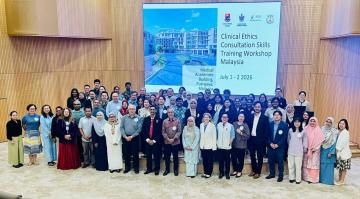
The main event of Dr. Brendel’s visit was the Academy of Medicine co-sponsored intensive two-day clinical ethics training program in Kuala Lumpur, where she served as visiting faculty. Organized by Dr. Tan and colleagues, the program in a short time has become a regional focal point for building clinical ethics committee capacity, bringing together senior clinicians, bioethicists, and legal experts as speakers and trainers. The Academy of Family Physicians of Malaysia, the Malaysian Oncological Society, and the Hospital Ampang Ethics Support Service served as co-organizers. The new Master of the Academy, Professor Hanafiah Harunarashid, officiated the workshop and affirmed the central role of ethics in clinical excellence. More than fifty participants, most of them senior specialists and consultants, worked through case-based discussions designed to build skills for members of clinical ethics committees. Sessions focused on how to identify and frame ethical questions, facilitate multidisciplinary deliberation, and support clinicians and patients through complex and emotionally charged decisions. By its close, the workshop had reinforced a clear vision: as clinical ethics committees continue to grow across Malaysia and the region, collaboration among clinicians, ethicists, and legal scholars will be essential for managing diverse value systems and complex cases in a systematic and compassionate way.
Dr. Brendel also participated in a series of academic and institutional visits focused on mental health and AI. At UTAR, the University of Malaya, and the Institute for Clinical Research and NIH Medical Research and Ethics Committee at Malaysia’s National Institutes of Health, she joined local leaders to consider how emerging technologies can advance care amidst known and unknown risks. Drs. Brendel and Tan, alongside colleagues from the Harvard Club of Malaysia, also visited UTAR Hospital, where they learned about an innovative model that integrates Traditional and Complementary Medicine from China, India, and Malaysia with Western medicine, reflecting the vision of CEO Lay Ming Ding and the patronage of Sultan Nazrin Shah of Perak, who earned a Master’s in Public Administration and PhD in Political Economy and Government from Harvard. The hospital’s model illustrates how different medical traditions can be brought together to serve patients in ways that are both evidence-informed and culturally grounded.
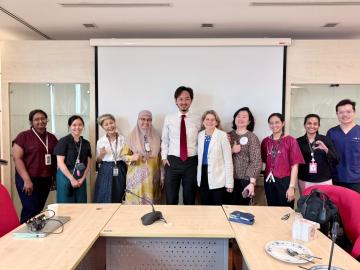
At the University of Malaya, Dr. Brendel and her former student, CUHK’s Professor Chung, spoke at a lunchtime seminar organized by the Faculty of Medicine. In his talk “The Principles of Justice: Understanding Health Equity and Social Determinants of Health,” Professor Chung examined structural inequities and health outcomes, arguing for a justice-based approach to clinical practice and policy. Dr. Brendel focused on AI and innovation, also concluding that bioethics must attend to both individual cases and the systems that surround them. In the realm of research ethics, the Medical Research and Ethics Committee (MREC) of the Ministry of Health at Malaysia’s National Institutes of Health hosted a hybrid seminar and CME session for Research Ethics Committee members focused on ethical challenges for mental health in the face of innovation and explored paradigms for mental health and psychotherapy research. Dr. Brendel’s keynote on mental health care and AI, examined how digital tools and data-driven systems are affecting psychiatric practice and research, and what safeguards, values, and other considerations should guide their use. Fellow psychiatrist Dr. Muhammed Najib followed with a presentation on the “ethical tightrope” of psychotherapy trials, drawing on his experience as a psychiatrist and researcher. Together, these talks explored how research ethics committees can respond thoughtfully to new forms of risk, benefit, and vulnerability in mental health research.
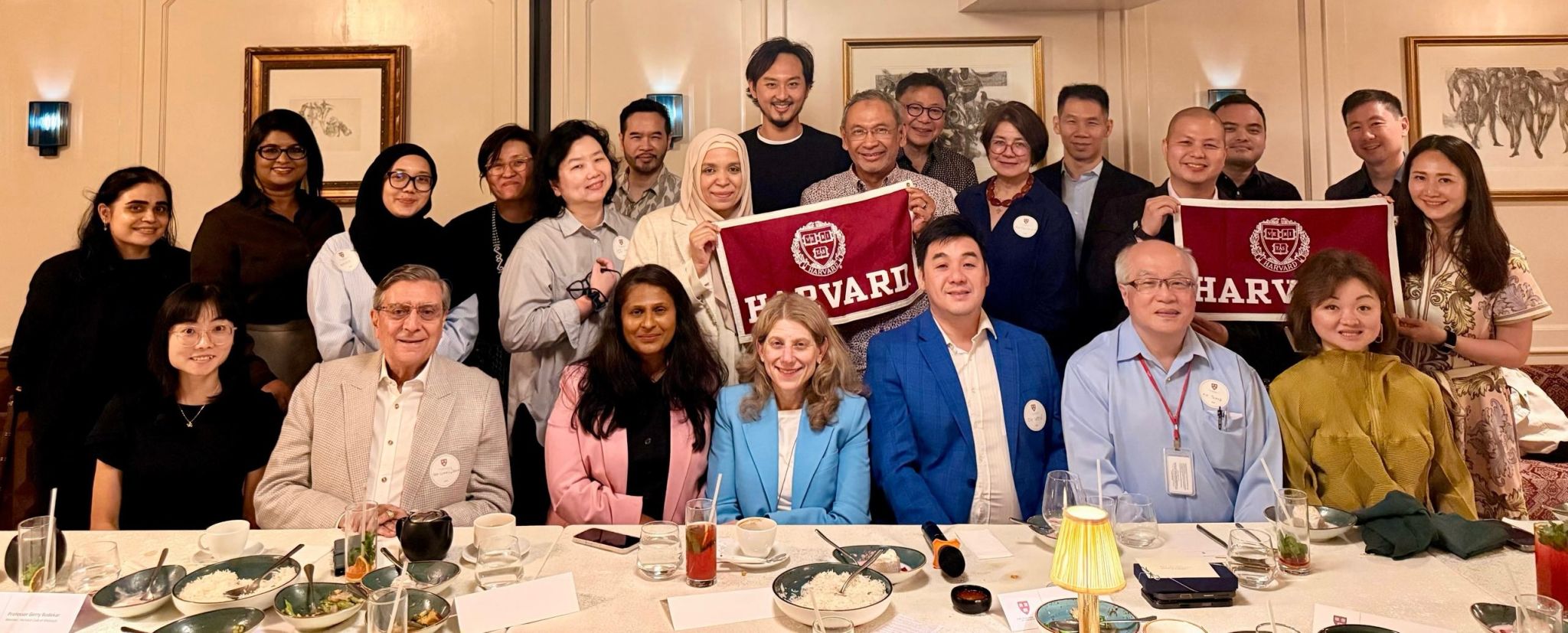
Finally, Dr. Brendel joined the Harvard Club of Malaysia in Kuala Lumpur for an evening of “Conversations and Connections in Medicine,” her second event at the Club this year. The Club’s leaders, including Eu Wen Khoo, Krishnavenee Krishnan, and Dr. Zafrina Burukan, hosted alumni and friends from across the region. Among those present were MBE alum and co-organizer Dr. Tan, Professor Chung, and fellow HMS MBE alum, lawyer Hillary Chua from Singapore. The remarks focused on hope and opportunity in an era of crisis and disruptions, with values providing clarity, fertile ground for shared commitment, and a structure for implementing moral solutions. After-dinner conversation ranged from advances in medicine and science to questions of leadership and public trust. The gathering underscored how Center alumni and friends are using ethical reflection to navigate change in health care and society around the globe.
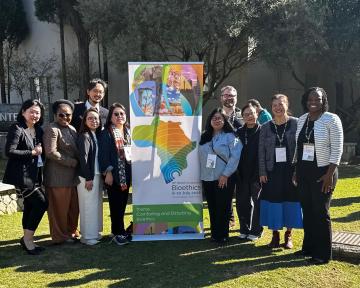
From July 8 to 10, 2026, Dr. Brendel participated virtually in the 18th World Congress of Bioethics in Johannesburg, South Africa. The HMS Center for Bioethics was well-represented on the ground by our global village of alums, who contributed to the theme of “Comforting and Disturbing Bioethics.” From Boston in the early hours of the morning, Dr. Brendel provided reflections on global ethics for a panel she co-organized with CUHK’s Professor Chung and joined by US colleague Professor Nancy Jecker. Alongside Professors Jecker and Chung, MBE alums Reina Ozeki-Hayashi, Ardita Pamudani, Dr. HS Tan, and Hajung Lee explored global perspectives for the work of bioethics, including Japanese notions of autonomy and accompaniment, Malaysian concepts such as Etika and Rukun Negara and the facilitating role of clinical ethics in patient-centered care, Indonesia’s Pancasila as a unifying framework for medical learning and practice, and the relevance of metaphor. Additional HMS MBE alumni presenting at the Congress included Drs. Akwi Asombang, Rennie Burke, Dong Dong, Mei-Yoke Chan, and Brenda Kubheka, whose collective work addressed racism and inequity, comfort and responsibility, and academic activism to challenge unjust structures.
Dr. Brendel’s summer continued to build an HMS bioethics network of dense and meaningful relationships among institutions and individuals around the world. Dr. Brendel and MBE graduates’ work highlighted the broad work of bioethics, spanning a number of today’s most pressing challenges: AI and the doctor-patient relationship, youth mental health, integrative models of care, research and clinical ethics capacity building, health equity, and global philosophical perspectives being advanced not only from established centers, but also by alumni and partners who are now leading in their own communities. In sum, the work of bioethics involves walking alongside, supporting, and learning with colleagues who are shaping bioethics in context and building partnerships that allow ideas, practices, and people to move in many directions.
In the coming academic year, this international engagement will continue in Europe. Dr. Brendel is scheduled to focus on psychiatric ethics at the World Psychiatric Association congress in Sweden and on moral leadership at the 18th World Conference on Bioethics, Medical Ethics and Health Law in Portugal and the 7th Medical Review Auschwitz Conference in Poland. These collaborations will focus on strengthening existing partnerships, exploring new areas of joint scholarship, and learning how colleagues in different settings are responding to emerging ethical challenges in medicine, science, and technology. This ongoing travel is also part of a broader celebration of the MBE’s milestone of surpassing 500 graduates of the Master of Science in Bioethics program. Alumni now work across clinical care, research, policy, education, and advocacy on almost every continent. By convening with them in person around the world, Dr. Brendel and the Center are together writing current and charting future chapters of global bioethics.