
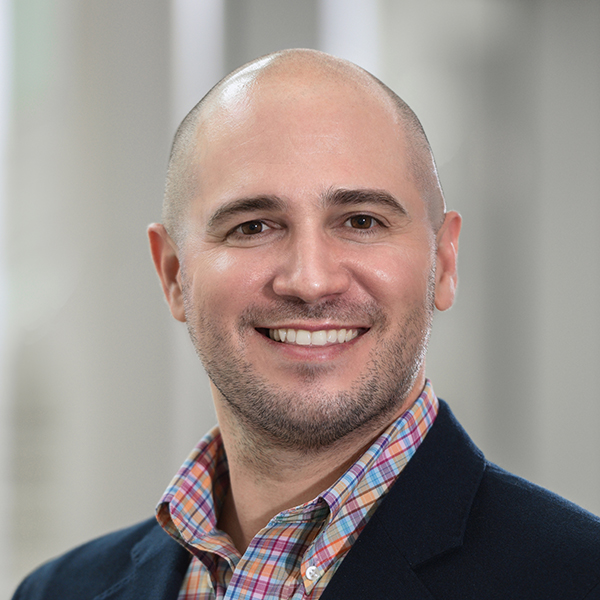
Gabriel Lázaro-Muñoz, PhD, JD
Gabriel Lázaro-Muñoz, PhD, JD, is a lawyer and neuroscientist, and Associate Professor at Harvard Medical School with appointments in Neurosurgery and Psychiatry at Mass General Brigham, and the HMS Center for Bioethics. He leads the Health Technology Performance (HTP) Lab at MGB Neurosurgery and co-directs the Neurotech Justice Accelerator at MGB (NJAM), a Dana Foundation Center for Neuroscience & Society. He is the founder of Fidelia, which builds standards for health technologies including neurotechnology, genomics, clinical AI, and digital health tools. Dr. Lázaro-Muñoz integrates training in neuroscience, law, and bioethics to examine the ethical, legal, and policy implications of emerging biotechnologies. His work uses embedded approaches, stakeholder interviews, surveys, legal, ethics, and policy analysis to translate empirical findings into actionable policy and certifiable standards.
As principal investigator, he has secured over $25 million in funding, including seven R01 awards from the BRAIN Initiative, NIMH, NHGRI, and NIDA. His current studies examine psychiatric genetics, polygenic embryo screening, polygenic scores for substance use disorders, neurotechnology (e.g., BCI, brain-computer interfaces; DBS, deep brain stimulation), human fidelity in technology development, and how to build stakeholder-centered infrastructure that effectively and efficiently delivers technologies to patients who can benefit. He has published over 125 manuscripts.
Dr. Lázaro-Muñoz serves on the NIH-NHGRI Genomics & Society Working Group, the International Brain Initiative Neuroethics Working Group, and the editorial board of Genetics in Medicine. His work has been featured in the Today Show, LA Times, Le Monde, Nature, STAT, NPR, the Associated Press, and MIT Technology Review. He received his PhD in Neuroscience (New York University), JD and Master of Bioethics (University of Pennsylvania), and BA in Psychology (University of Puerto Rico).